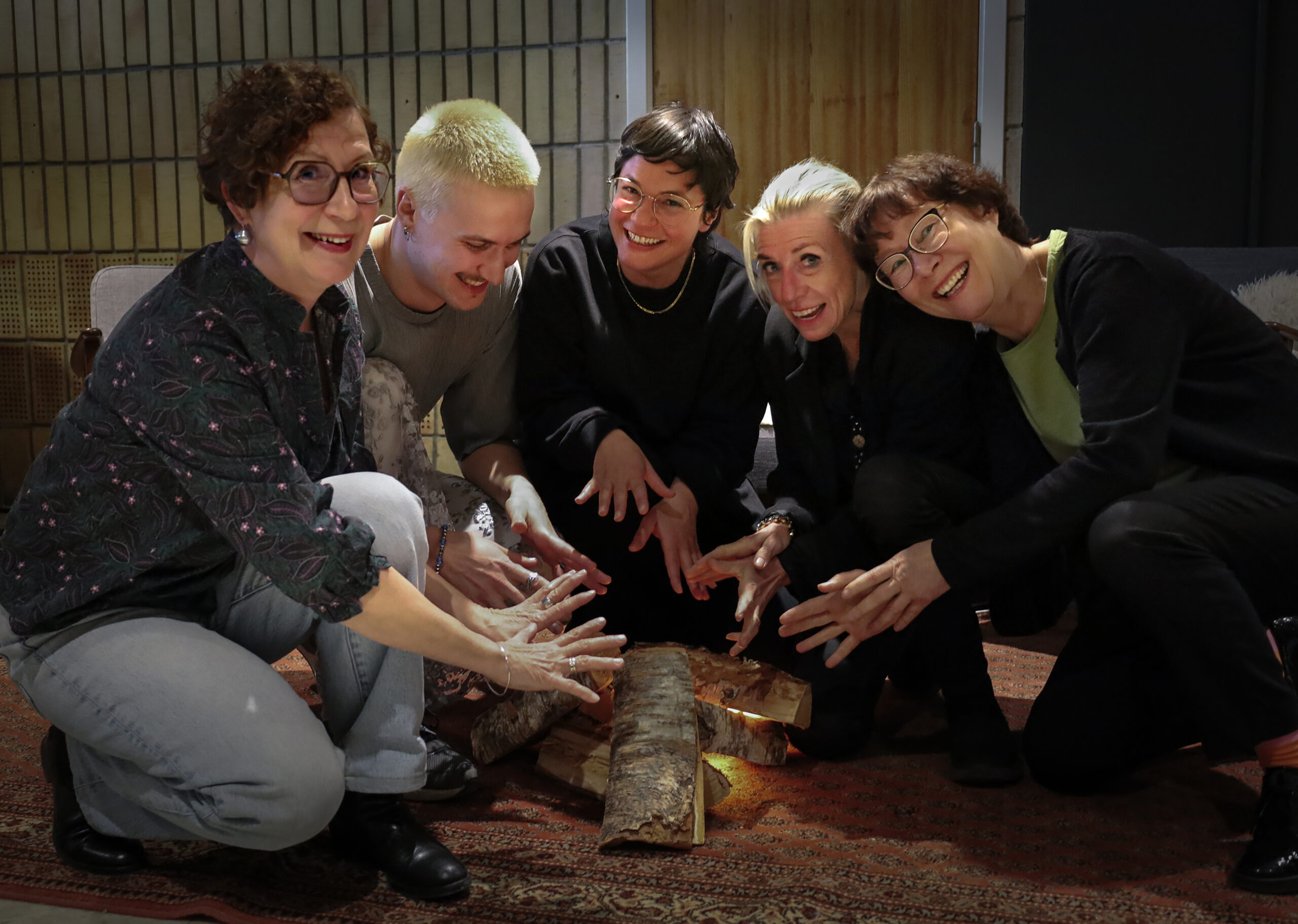
Moving with Time – Stories from Dance Makers was presented at the DANS STHLM festival in May 2026 by three artists whose stories left no one unmoved. In a camp-like setting built in the lobby of Dansen Huset, stories were shared, listened to, and discussed—and people cried and laughed together. Many had wondered beforehand how they would manage to sit through the three-hour event. Their worries were unfounded: Charlotta Ofverholm, Mia Habib, and Samuli Emery kept the audience captivated!
Malin Lundqvist, a producer at Dansnät Sverige, was one of those who had doubts about the event’s length, but was amazed at how quickly the time flew by.
“Moving with Time” created a rare space where choreographers can speak at length and reveal shared paths as well as specific obstacles stemming from generation or background.”
According to her, experiences like these foster recognition, empathy, and reveal unexpected connections. As a producer for the Swedish dance network, Malin faces the everyday challenges of the field on a daily basis.
“Moving with Time” offers a vital breather in the rapidly changing world of dance, which all too often overlooks the need for reflection,” she adds.
“The event also shed light on the reality that choreographers from different countries and generations can experience a deep connection through mutual dialogue,” says Amy Fee, Executive Director of Danscentrum Sverige.
“Through these stories, the audience gains insight not only into individual working methods but also into the past and present circumstances surrounding the art form of dance: the realities of working life, social contexts, artistic development, and the changing cultural conditions that shape both artists and audiences.”
Fee has been actively involved in developing Nordic cooperation in dance and appreciates that the event “allows time for reflection, nuance, and a deeper understanding of the diversity and development of contemporary dance in the Nordic countries.”
International Attention
Dance writer and researcher Anna Kozonina, in her review of the DANS STHLM festival for Springback Magazine’s online edition, also makes an exception to her usual focus and writes about the spoken-word program:”This format stands out as an interesting alternative to the typical festival events dedicated to dance history. It shifts the focus from grand names and linear progressions not just to the personal (and not to the myth of the ’exceptional personality’) but to the complex web of social ties, infrastructures and circumstances in which artists exist and dance histories are forged.”